
Humanity has always looked to the stars, imagining distant worlds and interstellar journeys. While sci-fi novels and movies have painted epic visions of space travel, science is starting to make some of these dreams possible. From advanced propulsion systems to futuristic habitats, here’s what the future of space exploration might hold.
Advanced Propulsion: Beyond Rockets For Space Travel
Traditional rockets are powerful but inefficient for long-duration missions. Ion thrusters, which use charged particles for propulsion, are already in use on NASA’s Dawn spacecraft. Nuclear thermal propulsion could reduce Mars travel time by half, making interplanetary travel faster and more practical. These technologies bridge the gap between today’s limitations and tomorrow’s sci-fi visions.
Space Elevators: A Game-Changer for Orbit Access
Space elevators remain theoretical, but they’re grounded in real physics. Using ultra-strong materials like carbon nanotubes, a cable could stretch from Earth’s surface to orbit, enabling payloads to ascend without rockets. This could make space travel cheaper and more routine—turning a sci-fi dream into a potential reality.
Sustainable Habitats for Long-Term Space Travel
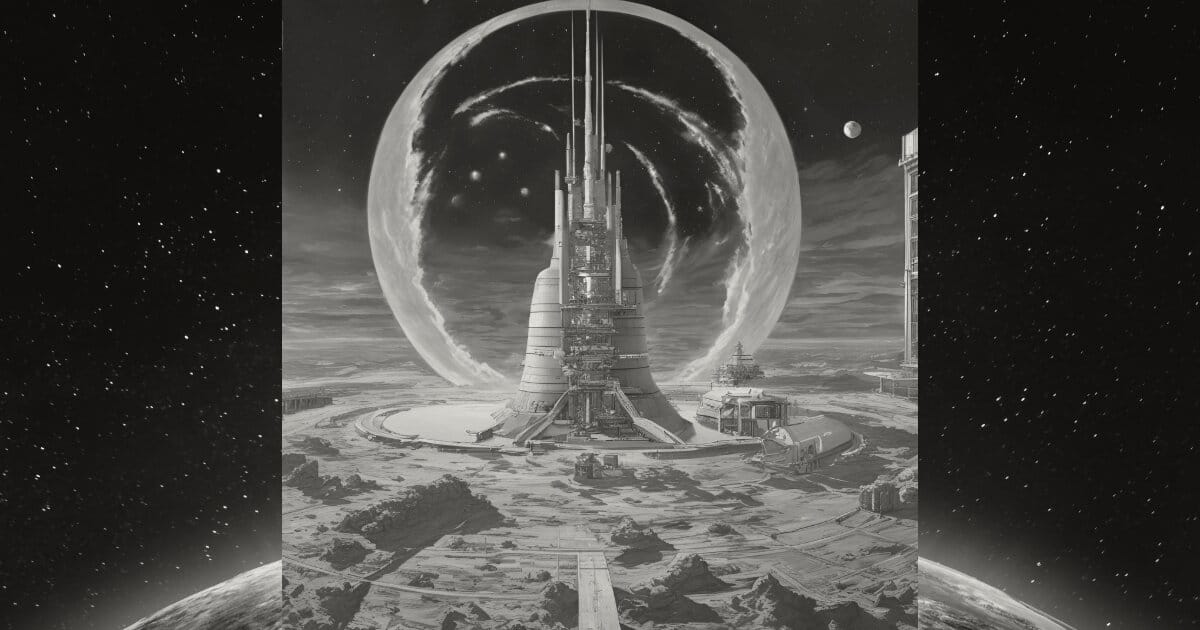
Extended missions require advanced life support. Microgravity causes health issues, and cosmic radiation is a serious risk. Rotating space stations could simulate gravity, while radiation shielding protects crews. NASA’s Gateway project and SpaceX’s Starship are already exploring modular habitats for lunar and Martian missions. A more advanced, albeit ficticious version also features in my forthcoming webserial, Hindsight Station.
Wormholes and the Physics of Faster-Than-Light Travel
Wormholes are theoretical shortcuts through spacetime, popular in sci-fi. While creating stable wormholes requires particle matter we haven’t discovered, ongoing research into general relativity keeps the concept scientifically plausible—if extremely challenging.

From Terror to Valor: Echoes and Shadows, available at your favorite digital bookstore
Terraforming and Interstellar Colonization
Exoplanets like Proxima b inspire dreams of colonization. While full terraforming is still science fiction, science is researching planetary atmospheres and building self-sustaining habitats in orbit or on moons. These projects could be humanity’s first steps toward interstellar living.
Conclusion: From Science Fiction to Science Fact
Space travel is no longer just imagination. Ion drives, nuclear rockets, rotating habitats, and even speculative wormholes show that science is catching up with sci-fi. The next century could see humanity become a multi-planetary species. For fans of science fiction and science alike, the stars are closer than ever.
About the Author
As I move onto my next authoring project, I will post less frequently on the real-world issues linked to my novel, From Terror to Valor: Echoes and Shadows. My next project, Hindsight Station, will initially be a progression science fiction, web-novel delivered via Patreon and eventually another web serial platform.
John is a versatile author known for his gripping fiction narratives in the thriller, action, and science fiction genres. With a background as a journalist since 2016, and expertise in cloud technologies as an engineer; John brings a unique blend of storytelling prowess and technical acumen to his work.